No. 0201 min read
Your installer finished. Is the damned system working?
At Raymond James, Splunk and Dynatrace helped cut critical-error diagnosis and remediation time by 40%.
No. 0091 min read
Fifty servers, fourteen years, 99.999% availability. Folks, you don't get there by being afraid to touch the damned machines.
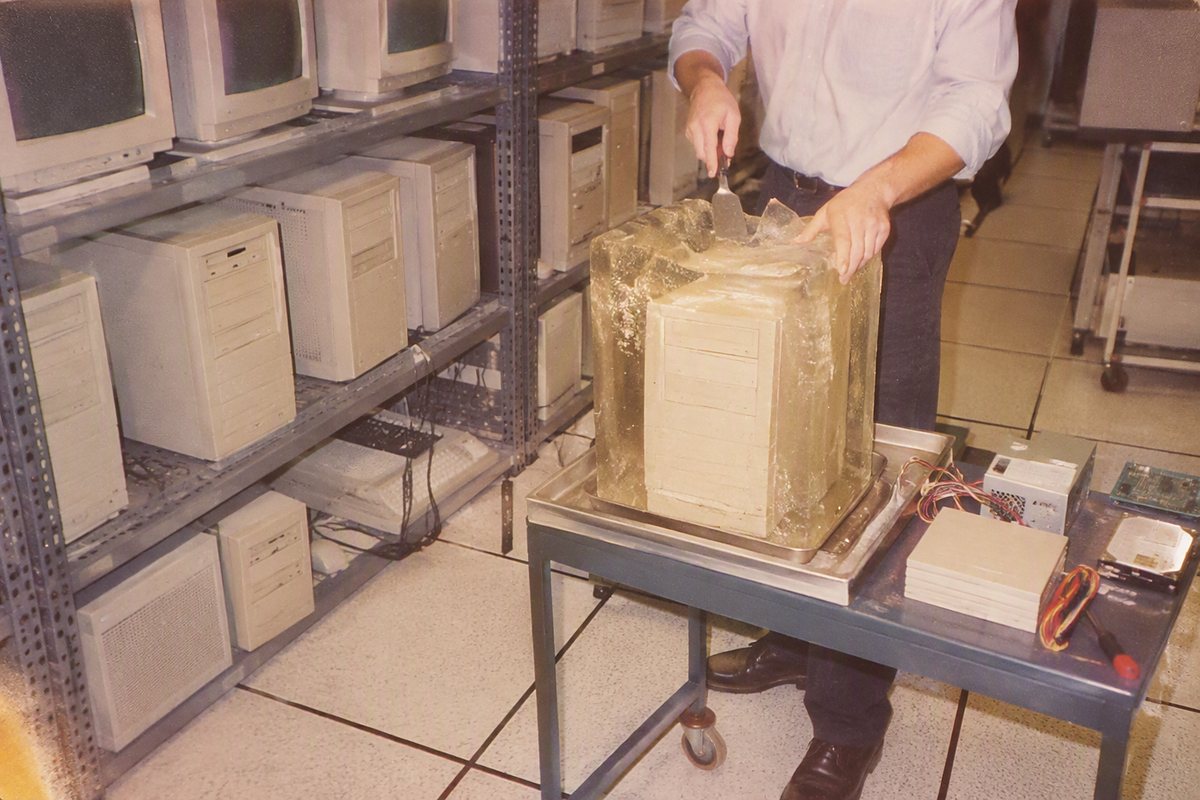
If you hear "fourteen years at five nines" and picture fifty servers nobody dared touch, I have some maintenance work to tell you about.
At Sprint[1]Ref. 1Sprint en.wikipedia.org, I deployed, configured, upgraded, and sustained fifty bare-metal and virtualized servers running RHEL[2]Ref. 2RHEL redhat.com, CentOS[3]Ref. 3CentOS centos.org, and Ubuntu[4]Ref. 4Ubuntu ubuntu.com for billing mediation. Availability: 99.999% over fourteen years. That is a looooong time to keep the work moving while you keep changing the machines doing it.
An unpatched server can stay up a damned long time. Somebody outside the company may get to choose its next maintenance window for you, though.
Patching has a visible risk. You change something, something might break. Leaving a vulnerability alone feels easier because that risk doesn't need a change ticket this afternoon. I still have to deal with it, even if it isn't on the calendar yet.
Before a change, I want to know what depends on the host, what stops during a restart, what should recover by itself, and what I need to check deliberately. The application can start and still fail to reach its database, and the operating system looks quite pleased with itself while your service is broken.
I want to see the work moving again before I'm satisfied. A daemon with a PID[5]Ref. 5PID en.wikipedia.org doesn't tell me whether the damned thing is doing its job.
Is the affected component installed? Is it reachable in the relevant way? Did the distribution backport a fix while leaving the upstream-looking version number alone? And what does the vendor support?
Sometimes the finding doesn't apply, and I want the evidence written down. Otherwise it needs fixing, with exposure reduced while that gets arranged. I get frustrated seeing a report just sit in a directory while the work is still waiting.
No. 0201 min read
At Raymond James, Splunk and Dynatrace helped cut critical-error diagnosis and remediation time by 40%.
No. 0072 min read
At sixteen I moved Advertisnet's services from Windows NT to Linux/BSDi.
No. 0501 min read
Fourteen years reconciling billing records at Sprint taught me to check what I know before assigning blame.
No. 0361 min read
Corrupt how, folks?