No. 0543 min read
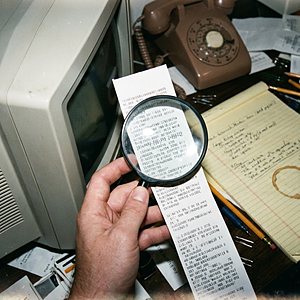
huh. What is this string, exactly?
A timestamp, a cron line, an exit code, an invisible Unicode character.
No. 0441 min read
Corkscrew fits in 291 lines, folks. That helps me understand it. It does not excuse losing your bytes or pretending proxy credentials are encrypted.

You can fit a Base64[1]Ref. 1Base64 rfc-editor.org encoder, connection setup, argument handling and a relay loop into 291 lines of C[2]Ref. 2C (programming language) en.wikipedia.org. That is the reviewed corkscrew.c -- 291 lines, and I can inspect the whole damned thing without trying to remember which service owns which part of a request.
The security review found memory corruption and authentication lifetime errors, and it found tunnel framing failures too. All in my little file. I could inspect those defects easily enough, but being able to read them did not magically repair shit.
I need to be able to hold enough of the program in my head to establish that it's correct. An explicit state machine[3]Ref. 3state machine en.wikipedia.org might be longer than my loop, and still be easier to follow because the assumptions are written down.
I like having 291 lines. But if an intact byte stream takes another page of C in the next version, I'll write the damned page.
No. 0543 min read
A timestamp, a cron line, an exit code, an invisible Unicode character.
No. 0531 min read
A shell that can undo the last thing you did.
No. 0431 min read
Corkscrew reported success without establishing a tunnel.
No. 0422 min read
The corkscrew audit turned three credential bytes into four wrong slashes.